Pte Marcel Briere
17 Oct 1922 – Prince Albert, Saskatchewan 19 Apr 1971 ◐
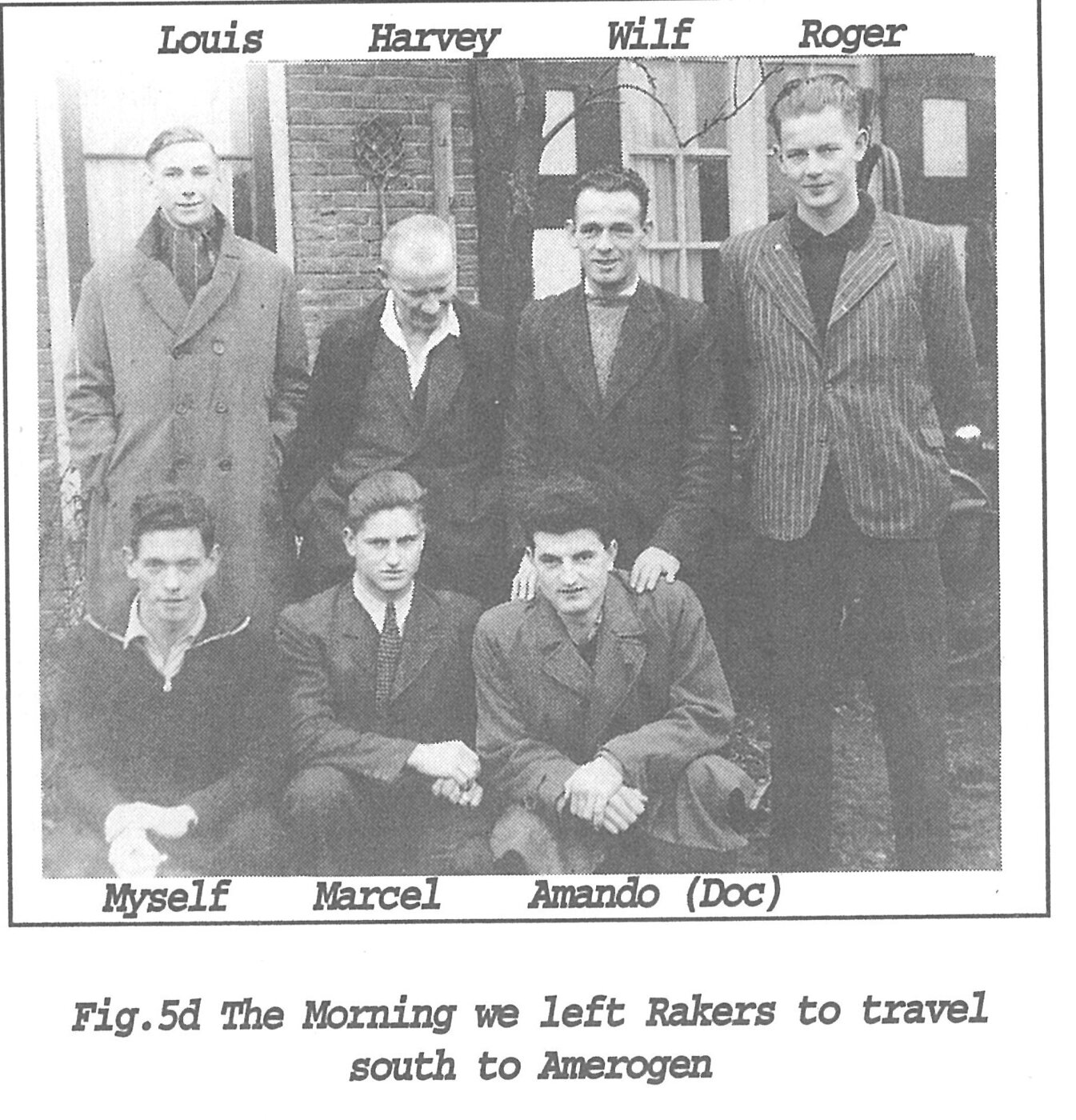
Pte Marcel Briere, 1st Bn Canadian Scottish Regiment (B.147856 in the war diary; B.14756 on his own report)
About: Private and stretcher-bearer in the 1st Bn Canadian Scottish, of Albertville, Saskatchewan: taken at the Leopold Canal on 7 October 1944, out of the prisoner train on 23 October, and hidden at Lage Vuursche, Bilthoven, Groenekan and Amerongen. Recaptured in Murphy's crossing party on the night of 2 January 1945 and freed at Fallingbostel on 16 April 1945; his report is the one that names Murphy among the men taken to Arnhem.
Unit or role: Private (stretcher-bearer), 1st Bn Canadian Scottish Regiment; a clerk in peacetime, army service from 8 June 1943 (his report, p. 1); "Marcel B. BRIERE Stretcher-bearer" on Hellendoorn's list and "Red Cross Infantryman" on Flip Esveld's (Hellendoorn, p. 5; Esveld, p. 7).
Where: Albertville, Saskatchewan, on Flip Esveld's list and Mrs Schuppert-Wolfert's table (Esveld, p. 10; her table, p. 4); 168 6th Street, New Toronto, on his report. In hiding: Lage Vuursche, Bilthoven, Groenekan and Amerongen, October 1944 to 2 January 1945.
Evidence: ✓ his MI9 liberation report, 21 June 1945, with Appendix A; ✓ Two Came Back! (cited by its own page numbers; the PDF opens with a cover note, so its page 2 is "Page 1"); ✓ the helpers' forms below; ◐ Schjelderup's MI9 report (a transcript); Porter, The Long Return; Kew's catalogue entry WO 208/3332/1154.
The Leopold Canal and the train. Taken prisoner with Schjelderup's company at the Leopold Canal on 7 October 1944, and one of the men who cut their way out of a prisoner train as it left Utrecht on 23 October. The war diary's list of the ten who jumped has "Pte Briere, M B147856 of the Canadian Scottish" (read on the page image) (Two Came Back!, p. 4; pp. 1–4). Flip Esveld's statement has him escaping "from the train near BILTHOVEN" (Flip's file, p. 7). The whole story is on Schjelderup's page.
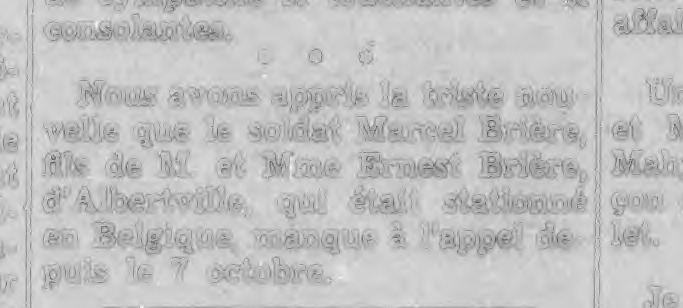
At home. ✓ By late November his family knew he was missing. La Liberté et le Patriote of 24 November 1944 reported that "le soldat Marcel Brière, fils de M. et Mme Ernest Brière, d'Albertville" (Private Marcel Brière, son of Mr and Mrs Ernest Brière, of Albertville), stationed in Belgium, had been missing since 7 October (the paper, p. 6), the day of the Leopold Canal. By then he was in hiding near Utrecht.
Who hid him, 23 October to late December 1944. With Berry at first, by the helpers' own forms (Berry's page has the same road with its sources, and the Maartensdijk and De Bilt addresses he alone had):
- Lage Vuursche. The two jumped "between den Dolder and AMERSFOORT" and hid in a wood while the Germans hunted for them; a man named Hilhorst gave them clothes but could not keep them, and the Van de Bunt sons, in hiding themselves, took them home, where for three days they shared the sons' hole in the garden, before one of the sons took them to Bilthoven with "Piet VERBEEK" (◐ Piet ter Beek, later shot) (W. van de Bunt's file, p. 4).
- Bilthoven. They went to Mrs C. J. Schuppert-Wolfert, Palestrinalaan 12, from 1 November (her file, p. 3; her table, p. 4, which gives his home as Albertville, Saskatchewan):
- H. van Hellendoorn and P. ter Beek brought them, and after a fortnight, when the railway nearby was sabotaged, they were moved to an uninhabited house nearby (her form, p. 3); her table has twenty-eight days from 1 November, then Rakers at Groenekan (p. 4). H. M. Hopma took them to the empty house in the Obrechtlaan, kept them supplied, and from there they went to Rakers (Hopma's file, p. 2).
- Her form also names her son-in-law, an "underdiver" in her house. ⚠︎ Briere's Appendix A has a "M. von MARSELAR" near Bilthoven for three weeks, but the man in his account has a mother, brother, sister and fiancée, which does not fit a son-in-law, so the two are not shown to be one.
- Groenekan. Rakers's table and his widow's form have him there from 28 November to 24 December; his widow's form has him arriving "in the last week of Nov 44" from Palestrinalaan, Bilthoven, with Berry a week later (the table, p. 3; her form, p. 8; Hermannus Rakers). Porter writes that Berry and Briere "arrived to hide with us", out of a small town to the north where their hosts had too little food (p. 125, chapter 5).
- Copyn. In December he spent a week with "Mr. COPYN Sr." at Groenekan, at the same time that Berry was with Hendrik H. Copyn; "The old gentleman has died since" (the Copyn form, p. 3, whose address number is faint on the image: 137 on the British index, 157 as transcribed from the form).
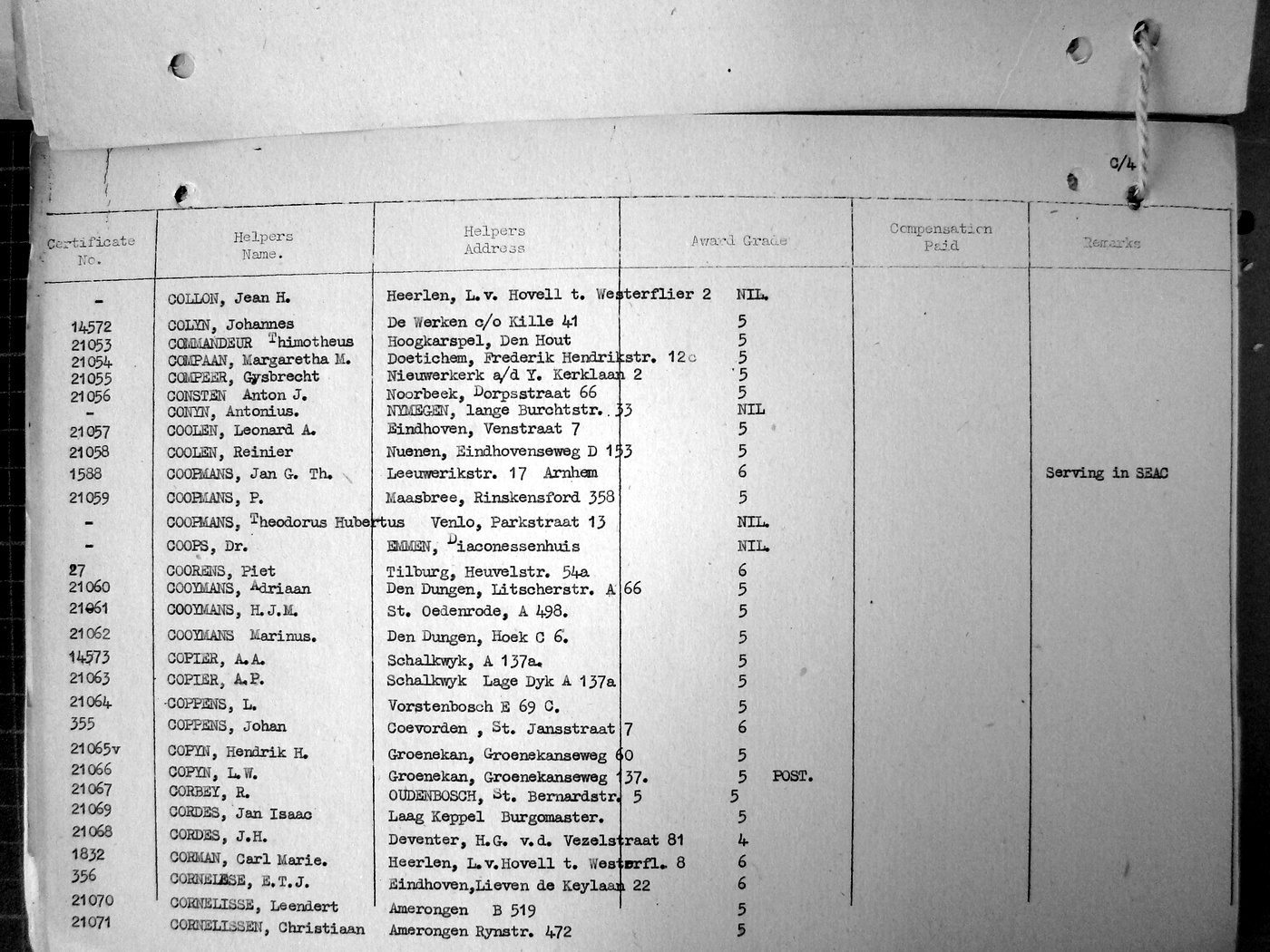
- How the British recorded his hosts. ✓ Mrs Schuppert-Wolfert is certificate 9493, Hopma 27080, Hellendoorn 14763, Rakers 27036 (his widow 22534), Hendrik H. Copyn 21065 and L. W. Copyn 21066 ("POST."), all Grade 5 (sheets S/8, H/18, H/8, R/1, C/4, read on the image).
In Schjelderup's MI9 report. ◐ Schjelderup's MI9 report (transcript; the Kew original not seen) (Kew WO 208/3351/2349) lists him as "Pte. BRIERRE, M.", with no number, in the party of 2 January. The brackets and footnotes in the transcript are the transcriber's.
- After the jump. The report does not name him there. Schjelderup learned at the Rakers house "that 6 other men of my party had jumped out of the train after us", that Rakers "personally saw that all of them had billets" and "at one time had 4 Canadians in his house" (Schjelderup's page). ✓ The Rakers table has Briere and Berry there from 28 November to 24 December, with Porter and Schjelderup (above). The report does not say where the six left the train.
- To Amerongen. "At 1245 hours approx., myself and three others were taken away by bicycle to AMERONGEN", on the day Schjelderup's Appendix A implies, 22 or 23 December (the report gives none; Berry's own report has the move on 24 December, as do the Rakers table and widow's form, and Hardy met Berry at Amerongen on 23 December: Berry's page). ◐ The three are very probably Porter, Berry and Briere, the other men in Rakers's house.
- 2 January. ◐ By the report's own list he was one of the five (Berry, Porter, Swartz, Briere, Trainor) who "panicked and ran madly onto the ice" at the second firing (Schjelderup's page).
With Murphy
Link to the section With MurphyAmerongen, December 1944 to 2 January 1945. His own report has him at Amerongen "from 8 Dec 44 until 1 Jan 45" with Berry, in the house of a man who had been in Canada five years as a mechanic in Alberta (his report, p. 2; ◐ Flip Esveld, whom Appendix A of Berry's report names for those days). Flip's statement has Briere brought to him "at the beginning of December 1944" (p. 7). At Christmas he and Berry were in the same house, which had a tree for the little girl who lived there (Porter, p. 138; Christmas 1944). Hans Hellendoorn of Bilthoven listed the six Canadians and "BOB", Porter, as "Allen doorgegeven aan 'Dirk' Langbroek en wel in Amerongen op Vrijdag en Zaterdag voor Kerstmis 1944" (all handed to "Dirk" of Langbroek, at Amerongen, on the Friday and Saturday before Christmas 1944) (his file, p. 5).
Murphy, named. His report is one of two of the three Canadian Scottish liberation reports held here that name Murphy (Swartz's is the other; Berry's does not), and ◐ Schjelderup's MI9 report, a transcript, lists "Pte. MURPHY, T. Paratrooper. 156 Para Bn." among the party too (the transcript). In Briere's, four British paratroopers joined them at Amerongen, "including Capt. NOBLE, Sgt. 'Tim', Pte. MURPHY and Pte. BUCK, all of whom had been captured at ARNHEM" (page 2; Swartz's page). The crossing, the ambush and the six who reached Arnhem "the following day", Murphy last, are in his report below. ◐ "Buck" is very probably Hardy (Hardy's page).
Where Murphy went. Apart from Murphy himself, who has his party taken "for interrogation to GWELF Headquarters" (his typed memoir, p. 2; his word, graded on HIS-ACCOUNT), Briere is the one man in the party who says. After the ambush he, Trainor and a Dutchman were marched to Arnhem with their hands tied, and "The six who were re-captured reached ARNHEM the following day. They were Capt. NOBLE., CSM BERRY., Sgt. PORTER., Sgt 'TIM'., Pte. SCHWARTZ., Pte. MURPHY." (page 3; Recapture, interrogation, captivity). The report does not date "the following day", or say where or with whom each was taken.
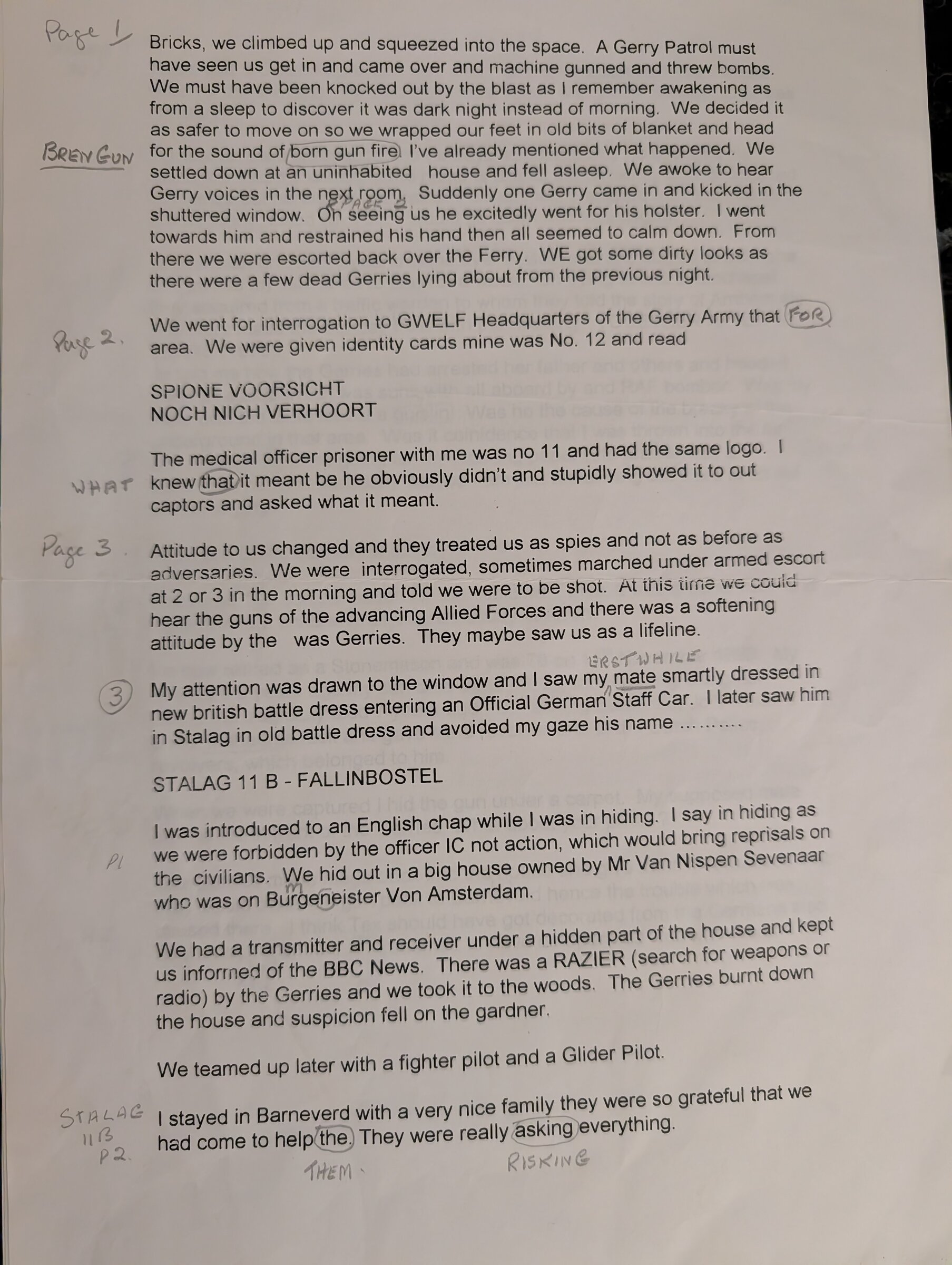
- ◐ Four of the six put themselves at Velp, by Arnhem, in their own accounts: Noble, Berry, Swartz, and Porter in his letter ("Felp"); Murphy has his party taken to "GWELF" (Noble; Berry, p. 2; Swartz; GWELF). ⚠︎ "Tim" rests on Briere alone.
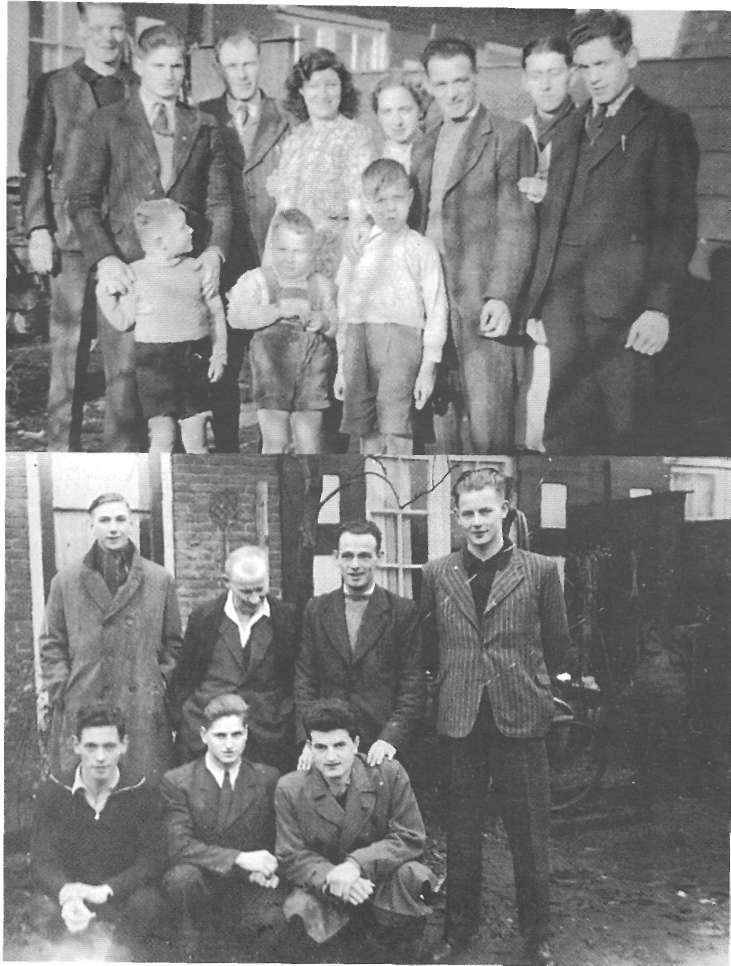
- ⚠︎ Porter's book has a different six: "Wilf, Louis, Harvey, Marcel Briere, the Army Doctor and myself were taken to Arnhem" (p. 151). That puts Briere and Trainor with him, where Briere has the two of them marched ahead, and has no Murphy and no "Tim" (Porter; Porter's page). Not reconciled: Briere's is a report of June 1945, Porter's a book written fifty years on.
- Berry's own report has Berry, Swartz and Porter together until 13:00 on 3 January; see below.
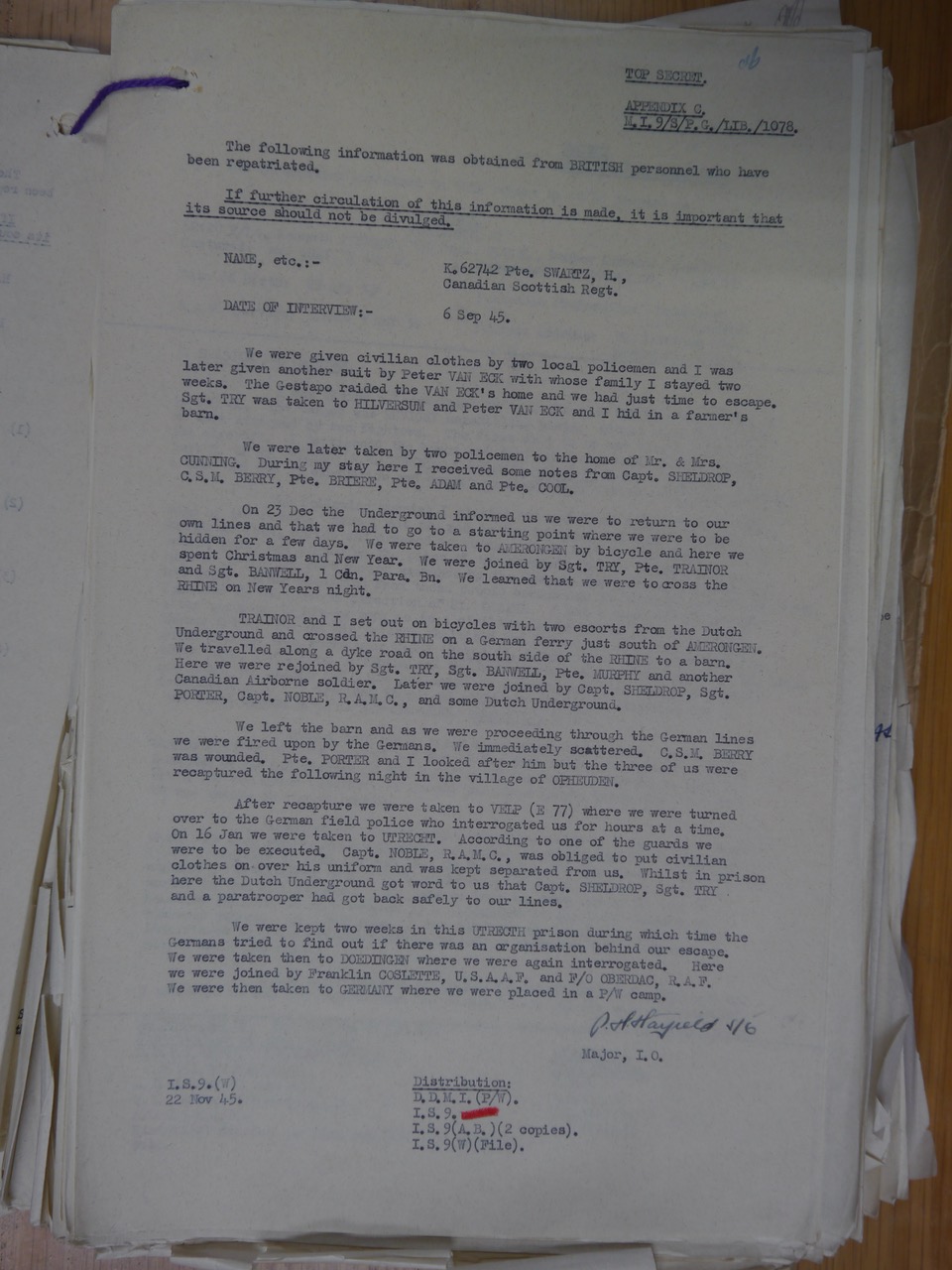
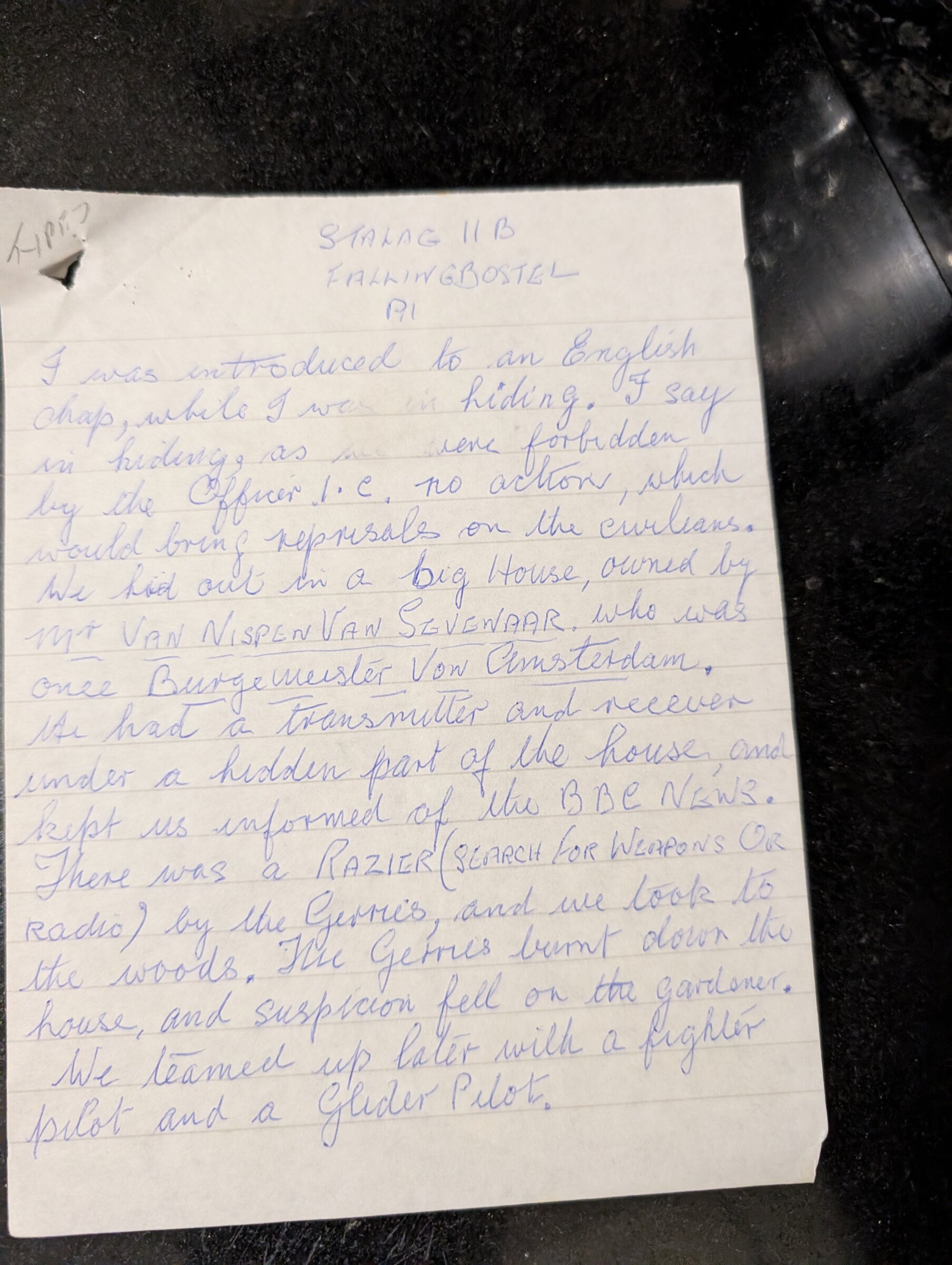
Porter's account of the men taken. Porter writes that "Louis, Marcel, Harvey, and the doctor from the Army all showed up, but we didn't see any of the others", and that Wilf, Louis, Harvey, Marcel Briere, the army doctor and he were taken to Arnhem, where they were held in a house and interrogated for a week or so; moved by truck to the Wolvenplein in Utrecht; and at "the end of January" put in a truck with "Wilf, Louis, Harvey and Marcel" again, for De Kruisberg at Doetinchem (pp. 150–151, 159, 163, 165, Porter). He never names Murphy.
Taken after the crossing. ⚠︎ Tjeerd Holwerda, the police sergeant who led the underground at Maartensdijk, wrote in 1946 that "Trainor, Porten, Swarts, Berry and Briere were from 16-1-45 until 9-2-45 in the prison at Utrecht, have been transported afterwards to Neurenberg and have been liberated there by the American Army" (his file, p. 23); another of his pages has the Wolvenplein prison from 19 January to 9 February (p. 29), and his English report says he heard of the ill-treatment "from Dutch guards" (p. 8). It is hearsay. Its dates fit the other accounts of the party's captivity, which have the Wolvenplein too (Recapture, interrogation, captivity), and Noble, taken in the same scatter, had the Gestapo prison at Utrecht from 18 January to 7 February (Noble); its Nuremberg does not.
Into Germany, and liberation. His own report has Bocholt on 24 to 27 February and Stalag XI B from 3 March; the heading of his report and Kew's catalogue entry for the duplicate copy of it (WO 208/3332/1154) give his freeing at Fallingbostel on 16 April 1945, the camp Murphy's notebook heads too (the catalogue entry; his report, p. 1; Murphy's heading). Porter has him with Berry, Trainor, Swartz and himself on a truck into Germany, after which Porter was separated from the others (pp. 176–177, chapter 8).
Home. Berry wrote to Mrs Schuppert-Wolfert from Canada in August 1945 that "Briere was also in Canada" (her file, p. 3).
After the war. The same weekly's Albertville column, read on the page images (the items), follows a Marcel Briere and his wife through the 1950s. ✓ Two items give his parents as "M. et Mme Ernest Brière", the father of the 1944 notice above: on 26 November 1955 "M. et Mme Marcel Brière sont revenus de l'Alberta et sont chez leurs parents" (p. 8), and on 17 May 1957 they "sont en visite chez leurs parents" (p. 10). The rest are in the same column and fit it without naming his parents, so ◐:
- Alberta work. On 27 June 1952 he and his wife "sont aussi retournés dans l'Alberta" with the young people gone away for the summer (p. 10); "revenus pour les travaux de l'été" on 29 May 1954 (p. 11); "revenus de l'Alberta" on 4 June 1955, in a party of returning couples (p. 8); and among those who "passent l'hiver en Alberta" on 30 November 1956 (p. 9).
- An accident. On 12 April 1957 "M. Marcel Brière se remet très bien à l'hôpital de Régina après un accident de puits d'huile, à Estevan" (p. 9).
- Prince Albert. On 29 August 1958 "M. et Mme Marcel Brière ont acheté une maison à Prince-Albert et sont déménagés" (p. 9). A Marcel Brière wins a "prix voyageurs" at a card party for the Collège Notre-Dame, held in the cathedral auditorium, on 16 February 1962 (p. 9); the report does not say where he lived.
His death. ◐ Marcel Briere, 48, of Prince Albert, Saskatchewan, "passed away suddenly at home" on 19 April 1971, with services on 22 April in Prince Albert (St. Albert & Sturgeon Gazette, 28 April 1971). The notice itself says nothing of the war; the age fits his birth in October 1922, and the 1958 move to Prince Albert puts a Marcel Brière of his family there.
His own MI9 liberation report
Link to the section His own MI9 liberation report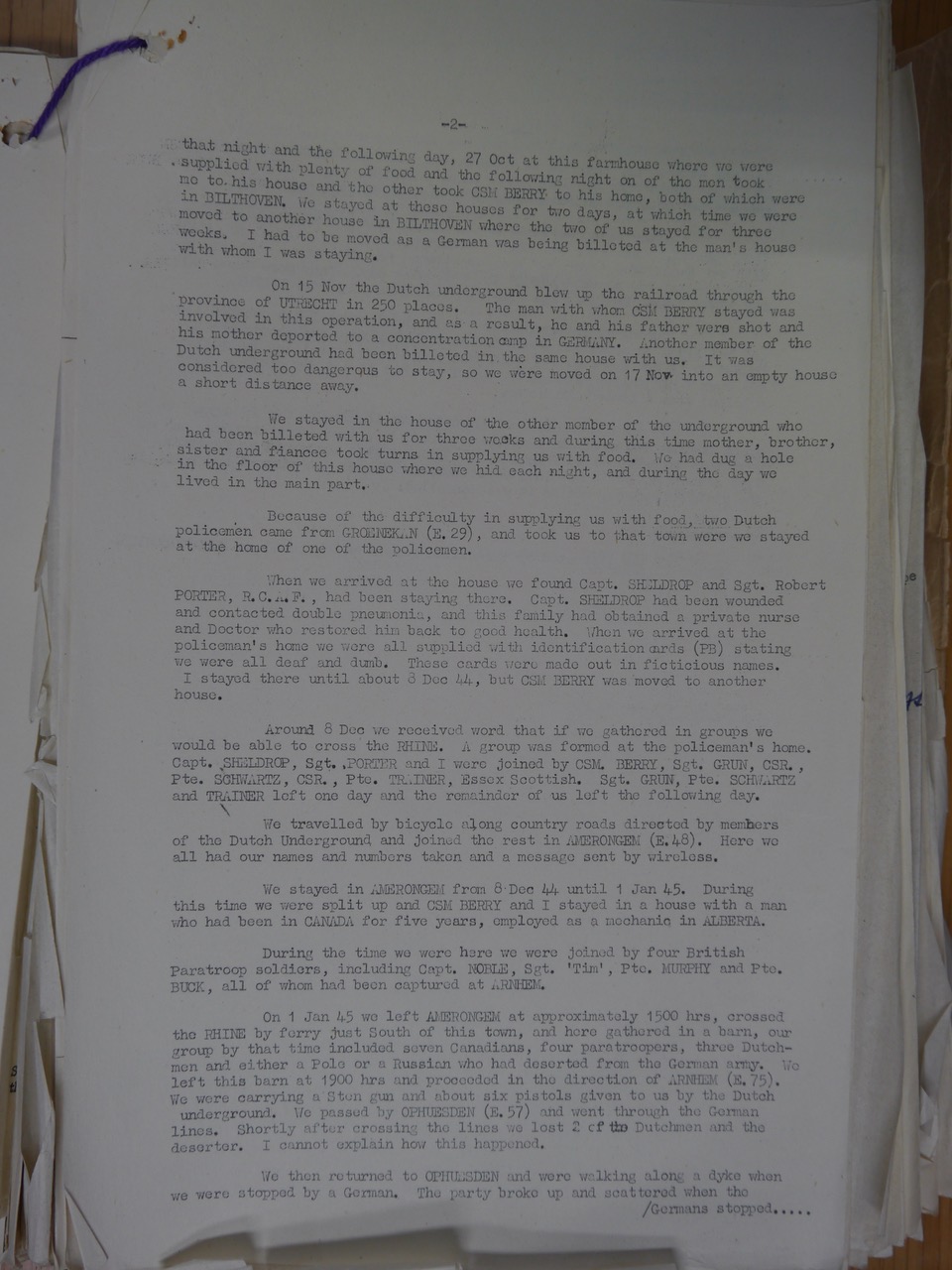
✓ His own statement, M.I.9/S/P.G./LIB/1154, "B.14756. Pte. BRIERE, Marcel., Canadian Scottish Regiment", interviewed by I.S.9(W) on 21 June 1945 (the foot of page 1 and Appendix A both say 21 Jun), with Appendix A (his helpers) signed on 12 November 1945. Kew holds it twice, as WO 208/3339/1154 and WO 208/3332/1154; the photographs, taken at Kew by the late John Howes, who passed them to Lisan Koppenol, and she sent them on, do not show which. Read on the page images: page 1, page 2, page 3, Appendix A.
The heading. Captured "LEOPOLD CANAL, 7 Oct 44"; liberated "FALLINGBOSTEL, 16 Apr 45"; born 17 October 1922; peacetime profession clerk; army service from 8 June 1943; private address 168, 6th Street, New Toronto (page 1). ✓ The birth date is the one in the catalogue entry (WO 208/3332/1154). ⚠︎ The number is typed B.14756, here and on Appendix A, and the catalogue follows; the war diary has B147856 (below).
His camps. Only two: transit camp "(BOCHOLT)" 24 to 27 February 1945, and Stalag XI B "(FALLINGBOSTEL)" 3 March to 16 April 1945 (page 1). Page 3 adds the earlier prisons, below.
The train and the hole.
While I was being taken from the LEOPOLD CANAL by train I was able to escape. There were forty men in the freight car in which I was riding. Capt. SHELDROP, C.S.R., and a Capt in the R.C.A., cut a hole in the car and ton [sic] of us were able to get away. CSM. W. BERRY, C.S.R. and I were last to leave the hole and were shot at by guards at an Air port beside the railroad track.
— Pte M. Briere · MI9 liberation report · 21 Jun 1945 · page 1
◐ Berry's "10 of us" is presumably what the typed "ton" means. When he reached Fallingbostel he heard that the others in the car "decided it was too dangerous to attempt to escape".
The night, as typed. "We had left the box car at about 2400 hrs on 24 Oct near SCHUTZBERG ( five miles east of BILTHOVEN ...)." They walked into the bush for about half an hour and rested until the following morning, then went on through the bush until 08:30, when they asked an old man the way to Utrecht (page 1). ⚠︎ Berry, Swartz and Schjelderup have the jump on 23 October. ◐ Briere's own run of days fits midnight on 23/24 October: the dug-out night and "the following day, 25 Oct" come after one night in the open, not two.
First help. At 10:00 they met sixteen men, aged 16 to 50, "all members of the Dutch underground movement who were going into hiding" to avoid labour in Germany. One spoke English and, told who they were, "told us to follow them". After two or three miles they reached a farmhouse and were given civilian clothes; at about 11:00 they went into a forest until about 16:00, then to "a dug out beside the road", where they had food, new clothing and a wash and shave, and stayed that night and the next day, 25 October (page 1).
To Bilthoven. At about 18:00 two of the men (names unknown) took them to a sanatorium half a mile from Bilthoven, "but the Doctor would not take us in", so to a farmhouse half a mile away, where they spent that night and the day of 27 October with plenty of food. The following night one man took Briere to his house and another took Berry to his, both in Bilthoven; after two days they were moved to another house in Bilthoven where the two of them stayed three weeks, and Briere had to be moved "as a German was being billeted at the man's house" (page 1; page 2).
The railway, 15 November.
On 15 Nov the Dutch underground blew up the railroad through the province of UTRECHT in 250 places. The man with whom CSM BERRY stayed was involved in this operation, and as a result, he and his father were shot and his mother deported to a concentration camp in GERMANY.
— Pte M. Briere · MI9 liberation report · 21 Jun 1945 · page 2
Another member of the underground had been billeted in the same house, and "It was considered too dangerous to stay, so we were moved on 17 Nov. into an empty house a short distance away" (page 2). ◐ The man is Berry's "PETE" (Berry's page), and the empty house very probably the one in the Obrechtlaan that Hopma found, a fortnight after 1 November (above).
Three weeks in the empty house. They stayed "in the house of the other member of the underground who had been billeted with us for three weeks and during this time mother, brother, sister and fiancee took turns in supplying us with food." They dug a hole in the floor, hid in it each night and lived in the main part of the house by day (page 2).
Groenekan. "Because of the difficulty in supplying us with food, two Dutch policemen came from GROENEKAN (E. 29), and took us to that town were we stayed at the home of one of the policemen." There they found Capt. Schjelderup ("SHELDROP") and "Sgt. Robert PORTER, R.C.A.F.", who had been staying there. The captain "had been wounded and contacted double pneumonia", and the family had got a private nurse and a doctor who restored him. All were issued identification cards (PB) "stating we were all deaf and dumb", in fictitious names. Briere stayed "until about [8?] Dec 44", but Berry was moved to another house (page 2); the digit is faint on the scan, and ◐ 8, because his next paragraph has him "in AMERONGEM from 8 Dec 44". ✓ The policeman is Rakers; Appendix A names him below.
The group of about 8 December.
Around 8 Dec we received word that if we gathered in groups we would be able to cross the RHINE. A group was formed at the policeman's home. Capt. SHELDROP, Sgt. PORTER and I were joined by CSM. BERRY, Sgt. GRUN, CSR., Pte. SCHWARTZ, CSR., Pte. TRAINER, Essex Scottish.
— Pte M. Briere · MI9 liberation report · 21 Jun 1945 · page 2
Grun (Gri), Schwartz and Trainer left one day and the rest the next, by bicycle along country roads "directed by members of the Dutch Underground", to Amerongen (E.48), where "we all had our names and numbers taken and a message sent by wireless" (page 2).
Amerongen.
We stayed in AMERONGEM from 8 Dec 44 until 1 Jan 45. During this time we were split up and CSM BERRY and I stayed in a house with a man who had been in CANADA for five years, employed as a mechanic in ALBERTA.
— Pte M. Briere · MI9 liberation report · 21 Jun 1945 · page 2
Then four British paratroopers joined them, "including Capt. NOBLE, Sgt. 'Tim', Pte. MURPHY and Pte. BUCK, all of whom had been captured at ARNHEM" (page 2). The man is discussed on Flip Esveld's page.
The crossing, 1 January.
On 1 Jan 45 we left AMERONGEM at approximately 1500 hrs, crossed the RHINE by ferry just South of this town, and here gathered in a barn, our group by that time included seven Canadians, four paratroopers, three Dutchmen and either a Pole or a Russian who had deserted from the German army.
— Pte M. Briere · MI9 liberation report · 21 Jun 1945 · page 2
They left the barn at 19:00 towards Arnhem (E.75), carrying "a Sten gun and about six pistols given to us by the Dutch underground", passed Ophuesden (E.57) and went through the German lines. "Shortly after crossing the lines we lost 2 of the Dutchmen and the deserter. I cannot explain how this happened" (page 2).
The ambush and the scatter.
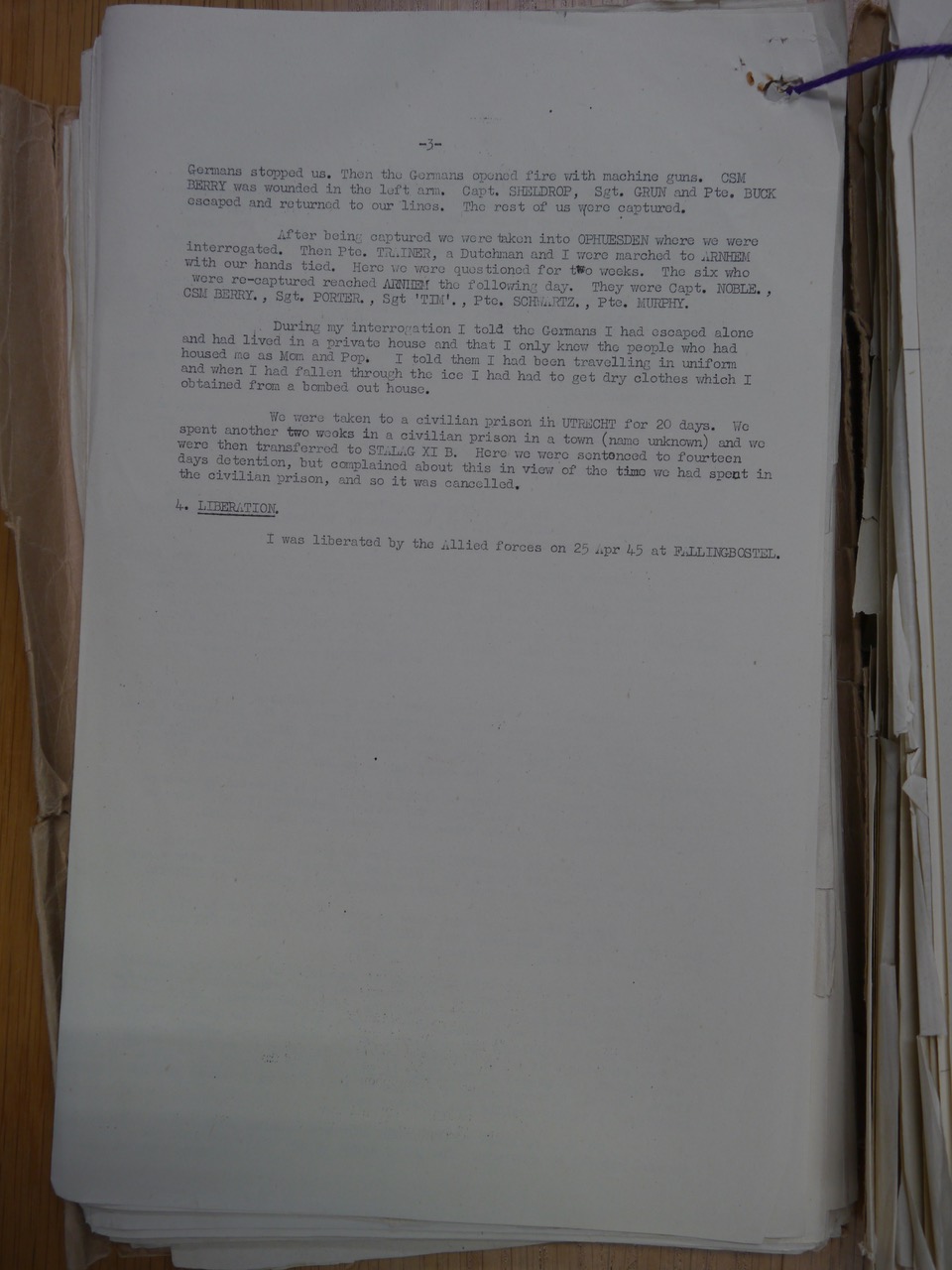
We then returned to OPHUESDEN and were walking along a dyke when we were stopped by a German. The party broke up and scattered when the Germans stopped us. Then the Germans opened fire with machine guns. CSM BERRY was wounded in the left arm. Capt. SHELDROP, Sgt. GRUN and Pte. BUCK escaped and returned to our lines. The rest of us were captured.
— Pte M. Briere · MI9 liberation report · 21 Jun 1945 · page 2; page 3
◐ Buck is very probably Hardy (Hardy's page).
Arnhem.
After being captured we were taken into OPHUESDEN where we were interrogated. Then Pte. TRAINER, a Dutchman and I were marched to ARNHEM with our hands tied. Here we were questioned for two weeks. The six who were re-captured reached ARNHEM the following day. They were Capt. NOBLE., CSM BERRY., Sgt. PORTER., Sgt 'TIM'., Pte. SCHWARTZ., Pte. MURPHY.
— Pte M. Briere · MI9 liberation report · 21 Jun 1945 · page 3
So Briere, Trainor and one Dutchman are the first taken, and Trainor went with him.
His story to the Germans. He told them he had escaped alone, lived in a private house and knew only the people who housed him "as Mom and Pop", and had been travelling in uniform; when he had fallen through the ice he had had to get dry clothes, which he said he got from a bombed-out house (page 3).
Prisons and the camp.
We were taken to a civilian prison in UTRECHT for 20 days. We spent another two weeks in a civilian prison in a town (name unknown) and we were then transferred to STALAG XI B.
— Pte M. Briere · MI9 liberation report · 21 Jun 1945 · page 3
⚠︎ Charles Noble's own later account (unpublished private papers, shared with us privately), told long after the war, has the Canadians of the party with him at Utrecht, naming none of them. At a first prison, "the wrong prison", the Canadians came in, whom he had not seen at Velp: "There were about five of them … These were the ones who had been on the dyke when we had been shot at". In the waiting room a German who took them for terrorists spat in Noble's face, until his guard said he was "an English doctor". At the Wolvenplein Noble was alone in a cell for three weeks: "The others were kept in two cells." At Doetinchem "There were Canadians who were in the cell next to me with two Americans and one Pole."
There they were sentenced to fourteen days' detention, but he "complained about this in view of the time we had spent in the civilian prison, and so it was cancelled" (page 3).
Liberation. "I was liberated by the Allied forces on 25 Apr 45 at FALLINGBOSTEL" (page 3); the heading of the same report has 16 April.
Appendix A, his helpers. "TOP SECRET", "obtained from BRITISH personnel who have been repatriated", the source not to be divulged (Appendix A). Names as typed:
- Dec 44, M. von MARSELAR, Near Bilthoven, Utrecht. "Food and shelter for three weeks." The name is on no other page here; ◐ the three weeks are the stay in the empty house above (see Mrs Schuppert-Wolfert's son-in-law, above).
- Dec 44, M. ROCKERS (A policeman), Groenekan, Holland. "Food and shelter for about a fortnight. Identity cards." ✓ Rakers, as above.
Where the sources disagree
Link to the section Where the sources disagree- His number. ⚠︎ B.14756 on his report, its Appendix A and the Kew catalogue; B147856 in the war diary (read on the image) and B-147856 on Rakers's table, Holwerda's table and Mrs Schuppert-Wolfert's table (Rakers; Holwerda, p. 23; Schuppert-Wolfert, p. 4). The Dutch forms may all copy one list, so the count is not proof; which is right is not known.
- When he went into Germany. ✗ Porter has the five put on a truck at about the end of March (p. 176, after an interrogation that was "almost the end of March", p. 174). His own report has Bocholt on 24 to 27 February and Stalag XI B from 3 March (page 1); Berry has the transit camp on 25 to 28 February and Swartz on 21 to 22 February (Berry; Swartz).
- When he was freed. ⚠︎ The heading of his report and the catalogue entry have 16 April; page 3 has "25 Apr 45". Swartz's report has the same camp, Stalag XI B, ending on 16 April: "I was liberated on 16 Apr 45" (Swartz, p. 1; Story 8). Holwerda heard he was taken to Nuremberg and freed there by the Americans (p. 23); hearsay, and in none of the three men's reports.
- Where he was held in January and February. His report has Utrecht "for 20 days", then two weeks in an unnamed town, which ◐ is Swartz's Doetinchem (Swartz's report, p. 1: Utrecht civilian prison 16 January to 6 February, "DOEDINGEN" 6 to 21 February). ◐ Twenty days from the Utrecht arrival on 16 to 19 January ends on 5 to 8 February, close to Holwerda's 9 February (above, our arithmetic); ✗ Nuremberg is in none of the three men's reports. Swartz's 16 January and Noble's 18 January into Utrecht are two readings of one arrival ◐ (Swartz's page; Noble's page).
- The night of the jump. ⚠︎ He types 24 October at 2400 hrs, where Berry, Swartz and Schjelderup have 23 October, "Two Came Back!" 23:00, and Hellendoorn "ongeveer 15 October" (Hellendoorn, p. 5). He says the two of them were "shot at by guards at an Air port"; Berry says only that the guard challenged them and they "got away without being recognised" (Berry's page).
- The dates at Groenekan and Amerongen. ⚠︎ He has himself at Groenekan until about ◐ 8 December (the digit is faint on the scan) and at Amerongen from 8 December to 1 January.
- His own day-counts do not reach it: three weeks from his move to a house in Bilthoven after 29 October is about 19 November; three weeks from the empty house on 17 November is 8 December, with Groenekan after that, not before (our arithmetic from his page 2).
- The Rakers table and widow's form have him at Groenekan from 28 November to 24 December (above).
- Berry's own report has Amerongen from 24 December and Swartz's has 23 December; Schjelderup's bicycle party left at 12:45, on a day his report does not give and its Appendix A puts at 22 or 23 December; Hardy met Berry at Amerongen on the afternoon of 23 December, in a house that is ⚠︎ the Cornelissens' on Schjelderup's evidence alone, with Berry's own 24 December beside it (Berry's page; Mr and Mrs Cornelissen).
- Holwerda has Berry and Briere at Rakers's "from medio November until Xmas"; Porter's order of events (p. 125, then his own move to the Heitingas in the third week of November) puts them there earlier than 28 November (Holwerda, p. 7).
- Flip Esveld has Briere brought to him "at the beginning of December 1944" (p. 7).
- His fortnight with the policeman ("about a fortnight" in Appendix A) is also shorter than the Rakers table.
- The date of the crossing. ⚠︎ He has 1 January, leaving Amerongen at 15:00 and the barn at 19:00; Berry, Swartz and the page have 2 January, with Berry leaving the barn at about 18:30.
- How the party was taken. ⚠︎ He has himself, Trainor and a Dutchman taken first and marched to Arnhem, and Noble, Berry, Porter, "Sgt 'TIM'", Swartz and Murphy taken together and reaching Arnhem "the following day", undated. Berry has only himself, Swartz and Porter, about 13:00 on 3 January (Berry's page); Porter has Louis, Marcel, Harvey and the army doctor "all showed up" after his own capture with Berry, and "Wilf, Louis, Harvey, Marcel Briere, the Army Doctor and myself were taken to Arnhem", with no Murphy and no "Tim" (pp. 150–151; above).
- The railway. ◐ His "250 places" on 15 November against the eighteen places of Two Came Back! alone (p. 5; Roy has only "a successful raid on a German supply train", Berry's page); whether it is the same night is not known.
- Buck. ◐ A "Pte. BUCK" who returns to the lines with Schjelderup and Gri is Hardy on every other account; no Buck is on Schjelderup's list.
- His death. ◐ Not tied to him by any record naming the war; see above.