“Weine”
"Weine", a name in one statement: Adriaan Maljers's, for the Americans, December 1945 (his file, p. 16)
About: The man who, by Adriaan Maljers's account, had "investigated the whole matter" (◐ the route through the flooded Betuwe), and whom Maljers met at the brickworks where the party gathered on 2 January 1945. Nothing else about him has been found.
Unit or role: ⚠︎ In Maljers's Dutch, "den persoon welke de zaak uitgezocht had" (the person who had worked the thing out) (p. 20).
Where: The brickworks across the Rhine where the party gathered on 2 January 1945 (Maljers, p. 16, for the brickworks; the date from Porter's caption, Fig. 6a, p. 143, and Maljers's letter of 2 November 1945, p. 14); Schjelderup has the crossing by ferry from the Amerongen area, then the party assembling in a brick factory (his report).
Evidence: ⚠︎ Adriaan Maljers's statement, English p. 16, Dutch original p. 20: the only source that names him.
With Murphy
Link to the section With MurphyThe route
Link to the section The routeOn 30 December 1944, after the raid on his headquarters at Langbroek, Adriaan Maljers went to his contact address at Amerongen to meet Hoogland and others, and the plan was made "to cross the gang of soldiers, consisting of 14 men, through the Betuwe to Doodenwaard", the Betuwe being flooded. A patrol was sent out on 1 January 1945 to look at the route; it came back the same day and said "that everything was allright, and that the crossing there was not a stiff job at all" (Maljers, p. 16). ◐ He may have been on that patrol, since Maljers calls him the man who had investigated the matter; Maljers does not say.
The brickworks, 2 January 1945
Link to the section The brickworks, 2 January 1945
The men crossed the Rhine two at a time and gathered at a brickworks, to go on after dark; Maljers came over last, with Cornelisse (Chris Cornelisse), "Captain Scheldrop" (Roger Schjelderup) and "Phorter" (Bob Porter), as he spells them:
In the brickworks I was introduced to the man who had investigated the whole matter and who was called Weine and with the guide who was to show us the way. There was also a certain Berry, underground worker, to join us.
Dutch originalOp de steenfabriek aangekomen maakte ik kennis met den persoon welke de zaak uitgezocht had zijnde Weine en de gids welke ons de weg zou wijzen. Tevens zou er nog een ondergrondsche werker Berry genaamd meegaan.
— Adriaan Maljers, statement for the Americans, 3 December 1945 · US National Archives, RG 498 · the English, p. 16; the Dutch, p. 20
Berry was Berry Melis (Oorlogsslachtoffers Betuwe-West, "Berry Melis, een Tilburger die voor het verzet werkte"; his own helper file, p. 3, on the same crossing). The guide, who went missing on the way "met een ondergedoken Pool" (with a Pole in hiding; the English p. 16 calls him "a hidden Pole"), is named by one book as Albert van Hattem (Maljers, p. 20; Noordman, p. 287).
◐ Weine, by the numbers each account gives, did not set out with the party. Maljers has "14 soldiers and 3 Dutchmen", the three being, on our reading, himself, Berry and the guide (p. 16); Schjelderup has "11 Allied personnel, DERRICK, and 2 other Dutchmen as guides", DERRICK being Maljers on our reading (his report; Noordman, translating the passage of Schjelderup's report that Hardy's report repeats, "11 geallieerden en een Poolse soldaat, Dirk en nog twee andere gidsen", identifies its "Dirk" as Maljers: Noordman, p. 287; Maljers's own record of service gives his pen name as Dirk van Langbroek, p. 15); Porter, "nineteen of us including Dirk and two other guides" (Porter, p. 143); and Noble, "2 Dutchmen" (Noble). Apart from Dirk (Maljers), Berry and the guide, none of them names its Dutchmen; none mentions a Dutchman staying behind, and none but Maljers names Weine. What speaks against the reading: Schjelderup lost "the Dutchman who was the guide for the latter phase of the journey" (his report), which leaves room for a guide of an earlier phase, and Noble's count of two Dutchmen is one short of the others'.
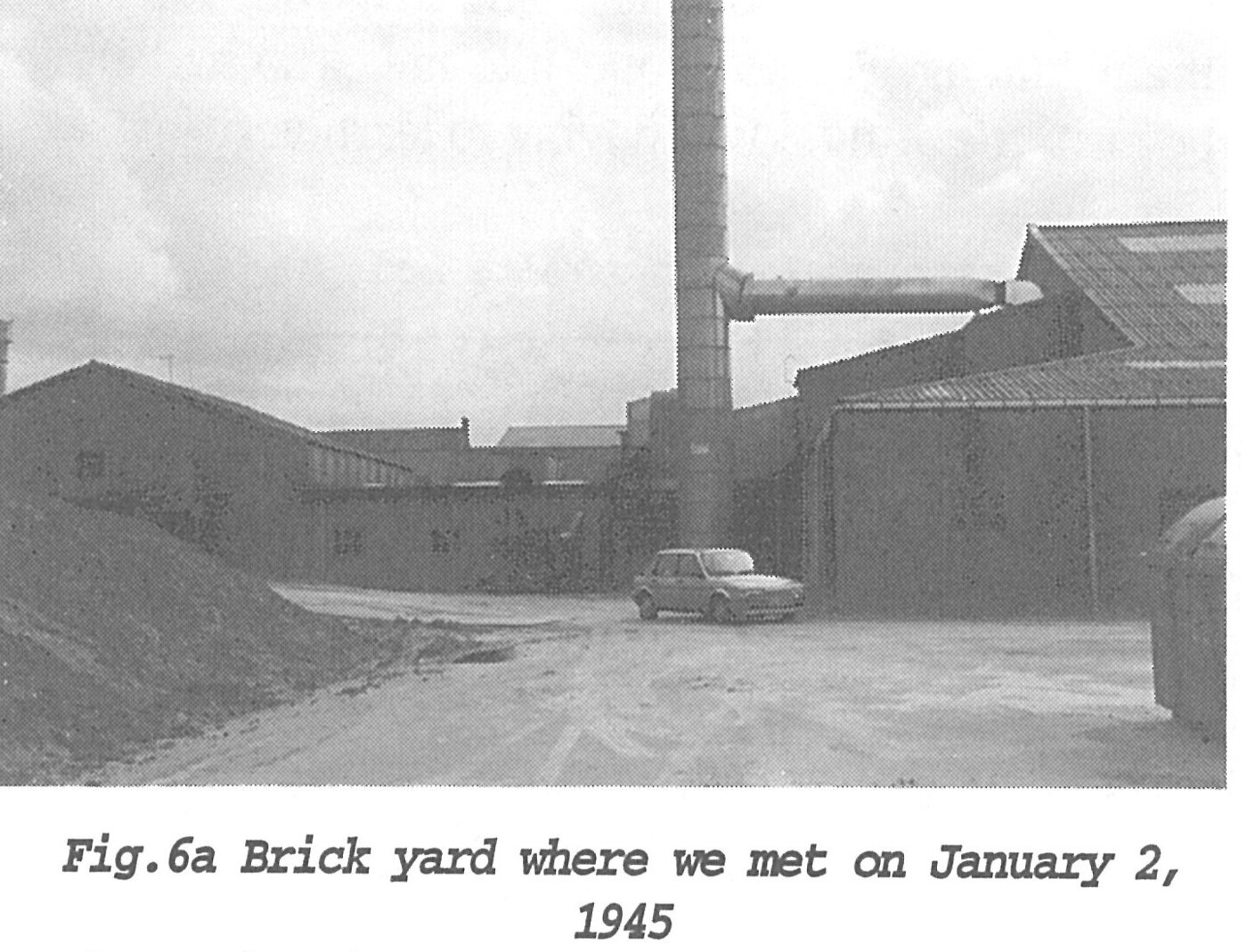
Two other Dutchmen at the brickworks are named in the accounts. Cornelisse came over with Maljers (p. 16; Schjelderup, "I was with CORNELISSEN and DERRICK", his report). The other is the foreman, in Porter's "The foreman of the brickyard, Leo Wels, was to hide us until nightfall" (The Long Return, chapter 6, p. 142; read from the page image). Nothing in the accounts makes the foreman and Weine one man.
Nothing is known. The name sweep of 17 October 2026 (the sweep) found no one who fits. The Open Archives index has 133 records for the name, most of them the given name Weine (Overijssel) or the surname before 1900 (Utrecht, Rotterdam, Leiden); none is a man of the Betuwe in 1945. The US National Archives search gave nine files: seven helper files (Maljers's own, five other Dutch ones and one Belgian) and two escape and evasion reports. The other eight are misread words in other people's papers (kleine, a place name, Weynen, WEISNER), or, for Coumou, nothing found. A Delpher search of 21 October for the name with each of the Betuwe villages, in newspapers of 1944 to 1950, found nothing (what each hit was, and the Delpher query).
Where the sources disagree
Link to the section Where the sources disagreeWhere the brickworks was. Maljers says only "a brickworks" across the Rhine (p. 16); Schjelderup gives "a brick factory at (Sheet 5, 4876)" (his report); Noble, "a farm house or brick factory building about 300 yards West of the RHENEN bridge" (Noble); Hardy, a barn beside a farmhouse at Kesteren (Hardy); Porter, an "old brick-yard, down by the River Waal" in the plan, reached after cycling to Opheusden and walking "a few miles through the German rear lines" (Porter, p. 142; read from the page image); and the Betuwe local-history page on Maljers, "de steenfabrieken Van Hesteren en Jansens bij Lienden" (the Van Hesteren and Jansens brickworks near Lienden) (Oorlogsslachtoffers Betuwe-West).